

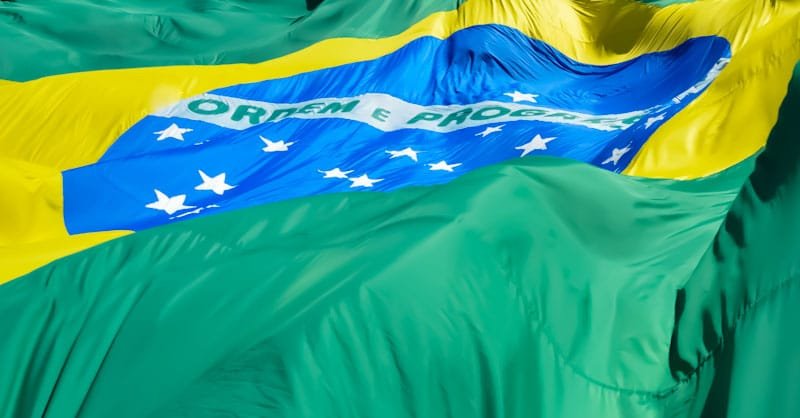
Brazil is gearing up for the decisive second round of its presidential election, where voters will choose between incumbent President Luiz Inácio Lula da Silva of the Workers’ Party (PT) and Senator Flávio Bolsonaro of the Liberal Party (PL).
Under Brazil’s electoral framework, a second-round runoff occurs if no candidate secures an absolute majority (over 50% of the valid votes) in the first round. The upcoming vote is scheduled for October 2026, where the candidate receiving a simple majority of valid votes will be elected president for a four-year term.
As the race enters its final stretch, both campaigns have presented contrasting vision platforms focusing on national economic management, private sector business environments, and the strategic development of critical minerals, including rare earths.
Economic Policies and Fiscal Framework
Luiz Inácio Lula da Silva (PT) The platform for the Workers’ Party emphasizes the role of the state as a driver of economic growth and social development. Key proposals focus on:
- Fiscal Strategy: Utilizing public investment to stimulate growth, with a focus on public infrastructure and social welfare programs.
- Taxation: Implementing progressive tax measures aimed at increasing direct taxation on higher-income brackets while offering tax exemptions for lower-income earners.
- Inflation and Credit: Expanding state-directed credit through public development banks such as BNDES to support domestic industries and small businesses.
Flávio Bolsonaro (PL) The platform for the Liberal Party focuses on market liberal policies, fiscal restraint, and reducing the size of the state. Key proposals include:
- Fiscal Strategy: Enforcing fiscal discipline, curbing public expenditure, and accelerating privatization programs (PND) to stabilize the public debt-to-GDP ratio.
- Taxation: Revising current tax reform frameworks to reduce the overall value-added tax (IVA) burden on production and consumption, alongside broad regulatory deregulation.
- Labor and Market Policy: Reducing labor costs for employers to encourage formal hiring, particularly for youth and workers over 50, and protecting direct employer-employee negotiations.
Business Environment and Industry
Luiz Inácio Lula da Silva (PT)
- Industrial Policy: Re-industrialization driven by green transition initiatives, public-private partnerships, and state incentives for national technology production.
- Small Businesses: Strengthening credit lines specifically tailored for Micro and Small Enterprises (MSEs) and expanding access to government procurement programs for local businesses.
Flávio Bolsonaro (PL)
- Deregulation: Implementing a systematic regulatory rollback (revogaço regulatório) to streamline administrative procedures and reduce the time required to start and operate businesses.
- Financial Access: Repositioning state-owned bank Caixa Econômica Federal into a dedicated platform (“Bank of Prosperity”) to facilitate business credit, financial literacy, and entrepreneurship programs, such as “Minha Primeira Empresa.”
Critical Minerals and Rare Earth Elements
Brazil holds significant unexploited reserves of critical minerals and rare earth elements, making the sector a key strategic area for both candidates.
Luiz Inácio Lula da Silva (PT)
- Focuses on state-guided mineral processing to ensure domestic value addition rather than raw material exports.
- Proposes aligning rare earth exploration with environmental sustainability standards, national technology research, and strategic partnerships within global supply chains.
Flávio Bolsonaro (PL)
- Emphasizes streamlining environmental licensing processes to attract private and foreign investment into critical mineral extraction.
- Proposes establishing long-term regulatory stability (up to 20 years) for large-scale mining investments to accelerate projects in rare earths, phosphate, and potassium, enhancing legal certainty for investors.
Voting will take place across all Brazilian municipalities and overseas polling stations, with official results expected shortly after polls close via the Superior Electoral Court’s (TSE) electronic voting system.




Leave a Reply