


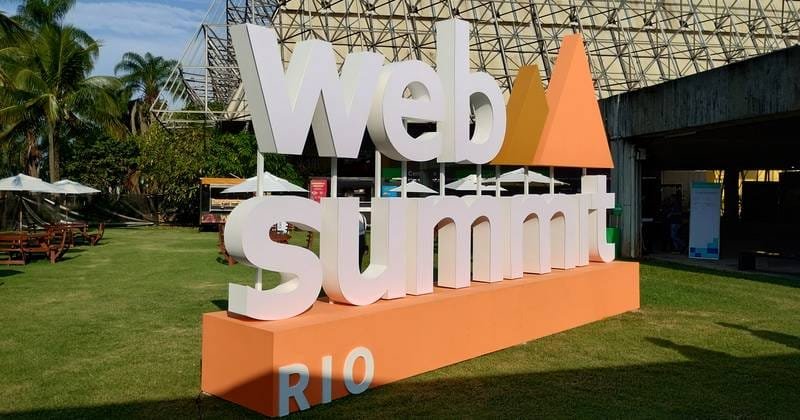
[Photo: Richard Souza / GE]
- Access to English: Promova is using Web Summit Rio 2025 to promote the idea that English proficiency should be accessible to everyone, not just those who can afford private education.
- A significant education gap: Only 5% of Brazil’s population reports having some knowledge of English, according to figures cited in the announcement.
- Flexible learning model: Promova combines self-paced app lessons, live classes with certified teachers and free conversation clubs.
- Social impact initiatives: Its Promova for Good program provides free language learning to refugees, displaced people and vulnerable communities.
- Support for women entrepreneurs: The company launched a US$50,000 scholarship initiative to support 50 women-led startups in Brazil.
- Personalized learning: Promova reports that 78% of its users learned faster with its personalized method, while 84% experienced greater confidence speaking another language.
- Web Summit agenda: The company will host activities at booth E351 and participate in a panel on how to stay ahead as AI reshapes the rules of business.
Promova Takes Its Inclusive Language Learning Message to Web Summit Rio
Global language-learning platform Promova is participating in Web Summit Rio 2025 with a straightforward message: “English is no longer a privilege.”
Operating in more than 100 countries, the company is betting on affordable, personalized learning solutions to address longstanding challenges in foreign-language education in Brazil.
According to figures attributed to the Organisation for Economic Co-operation and Development (OECD), Brazil ranks among the countries with the lowest levels of language proficiency. Only 5% of the population reports having some knowledge of English. Brazilian students also spend an average of just 1.8 hours per week studying foreign languages.
The gap is particularly evident in the education system. While students at private schools are often exposed to English from an early age, public schools provide an average of just one hour of instruction per week.
Inequality also extends to higher education. Of the 2,200 language and literature degree programs in Brazil, only 126 are offered by public institutions, most of them concentrated in the Southeast.
Language Barriers Affect Professional Opportunities
These structural limitations are reflected in the population’s English proficiency.
A Pearson survey indicates that 54% of Brazilians did not develop strong English skills at school, while only 22% feel confident using the language at work.
Against this backdrop, digital platforms such as Promova are gaining relevance by offering more flexible, affordable learning options tailored to individual schedules and goals.
“We believe English is no longer a privilege—it is a right. It is a tool for personal, social and professional transformation, and everyone should have access to it,” said Andrew Skrypnyk, Promova’s CEO and founder.
The company uses technology to deliver a combination of self-guided lessons through its app, live classes with certified teachers and free conversation clubs. Its approach is designed around each learner’s interests, needs and objectives.
Social Impact and Support for Women-Led Startups
Promova also leads Promova for Good, a global initiative that provides free language-learning access to refugees, displaced people and vulnerable communities.
In February 2025, the company launched “Empower Her Startup, Empower Her Voice,” a US$50,000 scholarship program designed to support 50 women-led startups in Brazil.
The initiative provides six months of free access to Promova’s Premium platform, along with group lessons and discounts for startup teams.
The program reflects the company’s broader effort to connect language education with economic opportunity, particularly for groups that face barriers to professional development and international expansion.
Personalized Learning and Neurodiversity
According to Promova’s internal research, 78% of its users learned more quickly through the platform’s personalized method, while 84% reported feeling more confident speaking another language.
The company also offers specialized support for neurodivergent learners, including people with dyslexia and attention-deficit/hyperactivity disorder (ADHD).
By adapting its learning experience to different needs and learning styles, Promova aims to make language education more inclusive and accessible.
Education Takes Center Stage at Web Summit Rio
Promova’s participation in Web Summit Rio takes place in April, the month in which Brazil observes Education Day on April 28.
The date highlights the importance of more inclusive education, particularly in an increasingly connected global economy where language skills are becoming essential for professional mobility and international business.
Promova’s Web Summit Rio 2025 Agenda
Booth E351
- April 28, 3 p.m.: Appearance by Felipe Theodoro.
- Prize wheel activities and opportunities to interact with the Promova team throughout the day.
Panel Discussion
- April 30, 12:15 p.m.: “How to Stay Ahead When AI Changes the Rules of the Game,” featuring Andrew Skrypnyk, Promova’s CEO.
For Promova, the message at Web Summit Rio goes beyond language learning. It is about expanding access to education, strengthening professional opportunities and ensuring that English proficiency is not limited by income or social background.